Thursday, November 24, 2011

Cut Your Teeth on some Commercialism

The last few weeks have been pretty up and down with my back problems. However I've been extremely productive this weekend and this week with commercial production and networking for some jobs lining up soon!

First, take a look at the behind the scenes I put together:


Hope you enjoyed that, it was definitely fun working on these 3 shoots on 3 days, even despite the long odd hours!   Let's take a short trip back to Thursday the 17th.  Harry and Michael contact me to ask me to help out with some commercials they wanted to shoot and they had put together a couple scripts for their separate ideas.  I get the scripts in email and read through them roughly.  That night we went to the house where we were to shoot Hot Diggity Dawg and plan out lighting and camera angles.


The idea was pretty simple and according to how he wanted to shoot it pretty much a majority of the audio would be built in post.  So on production evening the next night: Friday, I brought my Rode NTG3 and my Audio Technica AT3035 and ran some creative mic placement with the AT3035 in different positions in the room for when we did voice takes for when Lori had to say her lines.


I should mention that Friday before the shoot, Michael and Courtney showed up here before to do some quick foley session for all the sound elements we would need.  We had just enough time to record all the material.  That night Mok came by after and we dubbed the tape and brought it into a project to start a rough build, as well as capturing a separate session for the Door and gargle noises.   I didn't get to start cutting and editing the sound recordings until Sunday.


The first Foley session with the chip and bag noises I set up out in my living room for a large open space.  I used my Audio Technica AT3035 running through a snake which fed into an RME Fireface 800, and an SE Electronics Reflexion Filter on a 2nd mic stand (those things are beastly and heavy).  Michael was more than happy to oblige eating Pork Rinds and Tostitos,  I actually had him stand almost a foot away from the mic even with a low gain. 

The 2nd half of the session I brought the mic down toward the floor, and the Reflexion Filter as well.  We have a huge area rug but I brought in a small thick carpet mat and laid it down and covered it with a coupe strips of plastic wrap.  We did a few takes with a pair of sandals crunching on Pork Rinds, and then the same with Tostitos.  Then, we removed the thick carpeted mat and just did it again on the area rug which a much harder surface.  Several passes of "pitter patter" in various configurations.  


Later that night for the 2nd session, I employed my AT3035 outside the bathroom door in the hallway with the reflexion filter on for more direct sound and less room interference, close proximity to the door.


The NTG3 was placed inside the bathroom aimed down toward the sink, and then after a couple takes aimed up toward Mok.  The room tone inside the bathroom is very prominent but the door sounds after the gargles used the NTG3 aimed directly toward the door handle. I decided I'd share these with everyone.

Notes about samples provided: All the samples provided below are recorded at 96k / 24-bit and are provided in mono microsoft .wav format.  These are the raw unprocessed cuts, no processing, noise reduction or manipulation have been applied (not even gain adjustment).

Copyright notice: These are provided free for use in any form private or commercial use and I don't even require credit for use or duplication.  Feel free to share, distribute, edit, mangle, destroy and make the sounds into whatever you like, for whatever you like. 


Bathroom Gargle & Door.zip

  • Size: 4.28 mb
  • 4 files
Footstep Crunches.zip

  • Size: 7.84 mb
  • 19 files
Bag Ruffles.zip

  • Size: 9.45 mb
  • 13 Files
Eating Chips.zip

  • Size: 16.41 mb
  • 12 files

 
Saturday I spent most of my time processing and cleaning up audio making cuts to Hot Diggity Dawg and revising, all before production was supposed to start for It Takes A Lady.  We were to meet at Mok's location for shooting at 5pm.


When I got there everyone was setting up lighting and rehearsal.


The same two mics were used for all three commercials: Audio Technica AT3035 for room tone and ambience, and the Rode NTG3 on the boom for dialog and close-up.  We shot a ton of material that didn't make it into the 30 second spot, but perhaps later on we'll post up the 1 minute spot that the full commercial could have been.  

I placed the AT3035 right along the right wall just passed the cable hanging from the window sill to pick up a wide stereo effect for the scene where Troy Allen gets a kiss-assault on the couch.  I boomed the NTG3 slightly left overhead to pick up the left hand grabbing the couch and the AT3035 picked up the whole wall early reflections and movement ruffles Troy did when slamming himself into his seat for dramatic effect.  The Rode also helped for getting the close up of Arielle in her heels when she steps into frame as Troy Allen looks up at her in shock.  I blended the two mics to get just enough room tone and low-end to give some body to the heel sound but still have the prominent click for the impact on the hardwood floor that made it a definitive heel sound.  


It was difficult working in some tight spaces between the wall and the couches even with a long boom as trying to get the angles right for all the actor movements would tend to fall out of the scope of the mic or in the case of dialog with head rotation would cause severely noticeable off-axis sonic characteristics because of the narrow field of focus for the shotgun mic.   Luckily in the best takes that we used for the final cuts those issues weren't a problem.


One thing i tried to keep in mind as production sound mixer and boom operator is what the camera operator's position is dealing with.  During the productions we had 3 connections running to the camera (2 XLR's for phantom powered mics, and headphones so I could monitor sound).  

Both mics were run with 50 foot cables so there's a lot of  free cable all around the floor, and my heaphones (a pair of Sennhieser HD280 pros) are a much shorter length coiled cable.  One solution I tried was to use velcro cable wrap to attach to the operator and hang some of the cable up through his belt-loop.  However, Michael and Harry both were switching the camera between them fairly often so this became impractical.  

They were pretty good about it but I kept my eye on the cables for them and for complex shots where they needed the freedom to move I held the cables out of their way while operating the boom;  The Rode boom I have is extremely lightweight even with the mic attached which made it very easy to operate for longer periods of time and even one-handed.


The daytime on Sunday I spent an hour or so with Harry and his friend he had brought down from Sacramento to do the voice-over for Hot Diggity Dawg, and then that night I proceeded to post and sound design which was the most fun on this one as it called for a little "enhancement" and the use of sound design elements really helped sell what was happening on screen.  

The first shot where Troy slaps Daren's hand away I utilized several sounds layered in over the production sound track.  The swish sound of a whip through the air and a separate bullwhip crack together with the sound of Daren's hand being slapped and the ruffle of the Doritos bag sit well in the mix that really draw the attention to the fact that he's getting his hand slapped away.  

The biggest sound design elements I took my time with but still went really fast to make were the whooshes in and out of Troy's delusional dancing around in his head.  The first whoosh I used several layered elements including the noise of the water running in the sink I had recorded the other night, and some quick on-the-spot recordings I did with my mouth to mimic wind.  I processed these all heavily and mixed them together to get the final sound.  I used some parallel processing of dry and processed with some distortion, delay, and lots of reverb.  The result are some very crunchy and in your face whooshes that I pushed even further in the final mix for the comp.  The final element was an orchestral cue I had created just a sustained chord.  

The last element was the record scratch sound, and I re-used the whip noises for the butt-slap.  Doritos has a ton of assets they provide for the contest which includes music.  The rules are also extremely specific and limiting for the contest but I believe by sticking with the actual music from the contest assets they provide (which is what they specify) and venturing just a little bit outside of that for the orchestral cue just from my own sampler library and triggered with a midi keyboard, we were breaking the rules in just enough of the right ways. 

Another mixing decision that the rules were a bit vague on (they specify that you are not allowed to alter the music assets) was "Lo-fi" affecting the classical song that plays in the beginning to emulate the sound coming off a flat-panel TV,  Band-Passed EQ very heavily compressed and then a subtle distortion applied after compression.  All in all I edited audio late into the night (about 4 am) into Monday morning.

Monday morning however I had to be up at 7 AMto meet at Mok's location at 7:30 AM to shoot our final commercial he had thought up just the other day.  Running on just a few hours of sleep we were all a little tired and tried to get into it quickly.  Dewitt also had to be at work after 10 AM so we had to get as much as we could shot with him before he had to go.  


I had to operate the camera this time and got to cut my teeth some more on cinematography helping Michael get all the shots he wanted for this one, but even then the idea was so simple and quick there wasn't much to do.  A big factor in the difference between this one and the previous two is Natural light.  His open window with the blinds provided much of the light, but we still used some CFLS to help fill in, as well as Michaels new portable LED panel to accent key light.


I'd like to point out that shooting with the Sony Z1u I was happiest with the look of this video out of everything else we've shot on that camera.  It's an older one though it does HD well it's anamorphic (squeezed pixels at 1440x1080), and due to the age of the sensor even with a nice big lens it doesn't look very crisp especially when you starve the sensor of light.  The lighting on this commercial definitely came out the best, all the others just felt under-lit.  


Some thoughts on music scoring and comedy:

A few things I noticed when it came to this contest in particular is that working under constraints can be very rewarding in ways you weren't expecting.  Before we had finished editing we were still looking up all the rules for the contest and I was expecting to be able to write original score material.  And, while I noticed with a fair bit of examining competitive content on the crashthesuperbowl website had broken a few rules, all of them had some kind of score or use of music to it.  I don't think there was a single contest entry up that didn't utilize at least the music provided by the contest, some went so far as to make music the gimmick by having kids rap about Doritos or something to that effect, but very few if any featured any kind of scoring outside of the approved assets.  

While it would have been nice to create custom music to make our commercial stand out that much more, we were already under time constraints and to our surprise the music they provided actually proved to be very easy to get the mood we were looking for.

On a side note, congrats to Trials & Memories on their hard work and effort over the year working on their album.  The EP Hits local shelves and online Black Friday:


My first commercial work with orchestration is on all 4 tracks at over 30 minutes for the EP and the full length album will be 11 tracks which I will be working on starting next year.


Thanks for reading, and as always these are just my opinions.  Most importantly I like to hear others' opinions, suggestions, and commentary on these topics.  Feel free to leave comments, they're much appreciated!

Monday, November 14, 2011

Something's been on my mind...


A dragging economy, sluggish and self-serving government, broken political system; the list goes on.  Today there’s more wrong with this society than there were good intentions founding it some 200+ years ago.  We’re no longer in the era of fear of alienation.  What some would consider the “Era of information communication” is under constant political attack with bills that want to sway for control over the freedom of the internet.  Gone are the days of specialization and “profession”, this Era is something totally new.  It’s beyond just the DIY era; technology is so affordable and easy to access that even without much education someone is able to put together a small plan and call themselves a professional in whatever industry they like, with or without license or background.  That’s only half the problem, the government (and the special interest groups looking out for themselves) continually make it unscrupulous to enter into business, do business, or get out of business than ever before. 

During a report on CBS earlier this week I learned that currently in Stockton the city charges $52,000 in fees and anywhere from six to nine months to approve a single home building project.  A bit high considering the estimated median household income sits at around $45,000 (Stockton CityProfile).  In Washington DC, Interior Designers managed to get laws fabricated to secure their market for themselves by introducing legislation that requires strict and expensive entry as a newcomer.  Not only does this allow the current Interior Designers to be grandfathered in, it’s a win-win for the local and state governments.


T
he recording industry has experienced a complete change in landscape over the last 2 decades which in the last quarter of that span has completely shifted.  In 2009 the estimation was that half of LA’s commercial music business was up for grabs due to the economic climate change (Recordingstudios are being left out of the mix).  It used to be the kind of landscape where bands focused on writing and creating the musical and creative material that connected with an audience, the labels focused on how to market the act, and studios and producers practiced the obscure art of marrying the ideas the act created – the art; to a finished and polished product the label could sell.  Today, the major label studio is succeeded by the home studio; often powered by a single computer and software (which one could easily question how some of the software was acquired).  Now, a single person can pick up an instrument, hit record, and release a song or an album without so much as a single course supporting any skill in the various trades they’re covering.

T
he Film and TV industries have just started feeling similar effects over the years as the technology changes the landscape and it’s only going to make leaps in the harder direction (ThePost-recession model:  Fewer Jobs inDigital Hollywood).  In my opinion, they haven’t yet felt the turbulence the music industry has, but that’s only because the video technology shifts have not yet happened; not completely at least.  HDSLR revolution has only just begun to remold the landscape.  HDTV is being met with 3d stereo imagery; which will get superseded very soon as resolution wars continue to shoot into the 2k and 4k consumer devices. 

E
ven big industry moguls are trying to adapt to the quickly changing landscape, adopting digital distribution and copyright licensing methods to keep the business alive.  But my guess is that not too far from now the film and TV industry will be replaced with the ubiquity of the internet, the revolution of HDSLR empowering a single person the ability to create from the comfort of his or her own home; as our major news and Television network outlets are already trying to shift to an internet-centric medium.  The big hustle then will be proof of intellectual property.

C
opyright law is severely outdated and special interest groups are kicking into overdrive to try to gain some control of the marketplace and protect what they can of their precious life’s work.  Due to the freedom of the internet and affordable technology combined the music industry has crashed down on itself.  Most of the market relies on impulse buys of singles on iTunes and digital distribution while music departments of brick and mortar stores sit with nearly full racks of physical cd’s which sales have plummeted further than ever before. (AlbumSales Hit Record Lows. Again.).

M
eanwhile, [special interest groups] bankrolled by corporations with an agenda for self-preservation fight to pass bill after bill for control of the internet effectively “blacklisting” sites from U.S. Citizens by gaining unprecedented access to ISP’s and internet gateways (PROTECTIP Renamed E-PARASITE Act). This would force users to be unable to access a particular site because of copyright infringing material residing on it without so much as a notice to the site administration to allow them the chance to take down the offending material (House Hearing on SOPA).  What’s next? I can easily imagine not being able to publish anything to an online website without FIRST getting a copyright claim number to show proof your original material was indeed created by you.  Youtube, Twitter, instaGram and numerous other social media networks and services would effectively get shut down, at least in the U.S.  (Congressto Make Streaming A Felony).

S
o that’s not so bad right?  Finally making people take accountability for what they publish!  Maybe this turn could lead to better context of the internet instead of the sea of half-truths and unfounded opinion and personal trash; we could ideally separate from the flood of social newscasters.  Except in order to submit a copyright claim currently in the U.S. there is a global charge of $45.  Not bad… but every time you want to publish something you need to submit it before you can publish.  Government would make a killing off this, especially if you “tweet” every 10 minutes, or post up a picture from your iPhone on Facebook frequently just to share with the world whatever it was you wanted to share.

Here’s the downside, social media and the internet in general has been the final frontier in free speech and one of the few freedoms Americans and the world proudly defend.  Being required to show proof of ownership to publish a post on a social media site or upload that photo of your darling adorable kid could be considered a gross invasion of privacy and profiling.  Your entire life being categorized processed and stored for records at government facilities and databases on file no matter how innocent or suspicious it looks.  Suddenly, wanting to share your opinions behind the veil of the internet doesn’t feel so empowering anymore.

What’s this all mean?  Honestly… I have no clue.  I’m a big proponent in the words spoken by a very famousCharlie Chaplin, “we have developed speed, machinery that gives us abundance has left us in want.”  I believe it is true, that we have lost humanity to the cold and isolation of technology.  Technology itself has become our avatar.  Nowadays audiences are so floored and captured not by intriguing tales with great morals, but to the intricate and believably photorealistic special effects and every ounce of adrenaline-fueled action packed onto the screen.  Of course, the film and TV industry is not all action.  Each genre has an idiom but most are self-serving, shallow, or pedantic.

W
e concern ourselves more with the “feel good now” and the aesthetic than we do on the purpose, and true nature.  Even more sinister at the heart of general social culture is the disinterest in global good.  Make no mistake, I do not point a finger at any individual and say that he or she is unwilling to learn at all; most are just so concerned with only the individual goal, that anything beyond in science or nature that does not directly relate to that goal is usually not worth learning about.

A
ll throughout grade school and high school I shared that sentiment.  Something changed though; as I reached adulthood I found myself curious about every facet of life, nature, and the world.  I jump at the chance to absorb new knowledge about something when I am introduced to it.  Now, I yearn for deeper understanding, even philosophical; I don’t just question what, but why.  Especially with these kinds of issues our society currently faces, I ask why about politics, laws, even new technological emergence. 

I have a deep passion for audio, an affinity for learning, and an equal passion for film making and the dying art of telling stories.  So naturally, when I see a film, play a videogame, or read a book, I tend to experience it differently than most.  The first time when I watched Jurassic Park and the T-Rex pounded its way onto the screen and roared a majestic roar, the sound evoked a visceral feeling in my gut that resonated with some undefined emotion; it makes me smile and drop my jaw in awe, and instantly wonder how the creators made that sound.  What sources natural or synthesized did it take to get it to sound that way, and how did they make it sound so believable.  In fact, what was it about that particular sound and sight on screen that made it so believable?  I’ll bet when most people watch a TV show or film (at least for the very first time) they probably don’t wonder these things.  I know, some of you will; we apparently have something in common: we’re not the majority.

Today, in a world where the line between what’s real and what’s fabricated is so hard to distinguish, it forces us to scrutinize and become all the more skeptical.  Suddenly, everyone’s a critic.  People have such potent and distasteful opinions of our own media, yet we consume it still like it’s quite the opposite.  We all focus on the negative and explain how we would have done it differently (if not better).  We all aspire, we all have ideas, but in the wake of technology advancing beyond our capacity for compassion and kindness, have we lost touch with humanity, or is humanity evolving into this beast?

What industry are you in or aspire to get into?  What challenges have you faced in it, and what ideas can you think of to creatively troubleshoot the issues at hand?

Friday, November 11, 2011

Evasive Maneuvers!

Congrats again to Trials & Memories on their E.P. debut set for Black Friday.  They just posted up a 4 minute radio edit of Where Are You now on reverbnation, feel free to check out my orchestration work on these tracks!  My back has been slowly getting better, and projects are evolving all around me,  talks with Troy about doing some collaboration stuff for Neologic Studios, a couple of filming and video projects are in talks with Back Yard Studios and some other people as well.  When I finish my story boarding for a short film skit idea I'm working on I'll be posting those up here as well.

In the last couple days I started a quick project in Sonar just to get back into things and play around a bit.  Came up with this little idea i'm working on.


Troy had let me borrow his old Ibanez guitar to play around with and get in tune.  I opened up Sonar and just screwed around with some plugins, noteably this really cool feedback looper I was messing around with.  I laid down a couple takes and panned them wide in stereo and that started the track.

What the project looks like so far....

I wasn't sure what I wanted to do but I liked the idea of a pulse so I immediately looked for something bassy I could use.  There's a few synths I had in mind but I also wanted to play around with sound design so I kept that in mind as i built the track.  I played around with a bunch of synths for a few hours and then proceeded to tweak and dial in sounds until i landed on a couple that i liked, i simply played a single sustained note and some really cool ambient drones laid right over the guitar track I had, gave it life.

Since I hadn't done it in a long time, I started dropping some buses in to the project and using aux sends to create some alternate sounds with and start mangling up the ambiances I had started.  The guitar tracks were fairly simple and got old quick so after the idea of the feedback loop had run its course the with the regular bass pulsing on, I created an aux send for the pulse to go to a bus called Pulse where I put some plugins called Betabugs Chorrosive and then into Absynth 5 to get this really cool sounding distorted heartbeat effect out of the bass pulse.


The other bus I created for an aux send was for one of the synth elements called Synth Drone which fills in for the guitar with the muddy distorted mid-range droning and the high end metal tones that come in and out throughout the rest of the mix.


I moved on in the piece quickly to piano and strings.  I used the piano sound to try and play around with the chord Ideas I have in my head that I can hear the strings playing.  I still have some work to do on it as I hear some other changes with suspended 7ths that I can't quite get down yet.  I also fully intend on expanding on this idea and take it somewhere else.

I hope you enjoyed this quick mix.  The strings are still just a bit harsh thought i did want the more intimate close feel, I used several Divisi sections,  when layered with the piano make the symphonic components feel separate in the mix from the electronic sound-scape.

I didn't want the typical "LARGE" hall sound but that Sony sound-stage feel from a quieter more direct passage with strings.  I used a subtle reverb on the whole symphony bus and it helped blend and marry the strings to the track without creating a tail or smearing the details of the string movements.


It's actually been really fun writing this piece with all the Divisi sections and a real learning experience.  These are all just legato sections being played so it's actually fairly easy to get through.


My next phase for the piece is to move into a more symphonic movement that keeps the pulse coming and going to pay homage to the track, with some of the dystopian electronic elements sprinkled throughout for the original flavor as the movement turns more action oriented.  I can definitely imagine some type of spy scene of the Bourne supremacy likes or even Body of Lies, modern techno covert turns action.


Divisi (interesting article for reference) is a really cool way of dividing up a complex combination of notes to be played amongst the group of musicians.  Especially strings which often account for a majority of the instruments in a modern or classical symphony.  Usually these softer passages require the attention during a production recording to get in closer to the instruments with close or section mics, so you get more of the natural phenomena of the instrument (the sound of the bow scraping across the string producing a hissing or scratching sound) which is often diminished when larger groups play together, i.e.: the "chorus" effect.  Breaking down the whole group of violins (1st and 2nd) into smaller sections and having them play the passage this way allows to get the softer dynamics and more intimate feel (granted the close/section microphones are available in the sample libraries).
 

The whole thing inspires me in the way John Powell's work on Bourne Supremacy soundtrack meets something like Battlefield 3's score (which is very electronic ambient; very different from their previous works).  Even a little bit of Alexandre DeSplat with the fusion of electronic (much cleaner) and symphonic in Syriana.

There's also something else to the space created in the sounds, all the dystopia electronic drone work going on with the glitches and panning effects, coupled with the heart beat and pulse, then this distant washed out piano comes in with a sparse melodic chord change which is met with an intimate and close string section.  I'd like to know what everyone's thoughts are on the picture being painted here.  Please feel free to leave comments, flaming remarks, doodles, power-point presentations, links to unrelated events, even cast your vote for American Idol, whatever you like!  Just kidding, but please if you have feedback of any kind I absolutely love to hear it!

Monday, November 7, 2011

Short and Quick

So,  October was fairly busy.  Life's been hectic if nothing else.  Wrapped up work on the E.P. for Trials & Memories including finishing album art design;  which you can follow here.  They also just recently posted up a 4 minute radio edit of Crematoria.  The EP Drops on Black Friday!  Congrats to Jeremy and Mikey!  They also were very happy with the final album artwork.  I am too.

So what have I been doing?  Nothing. Well, not really.  Short Film Soiree got started with a group of friends doing short film projects and lately I've been spending my time doing some storyboarding for a couple.  Troy is also back in the area so we've been collaborating on some of the projects, and planning out a couple skits.  Aside from that I helped him set things back up at the Warehouse.

Microsoft started a public submission for the Windows Gallery themes expansions they've been doing and calling for all kinds of artwork.  I took some time to update a bunch of my Fractals and submitted them

Unfortunately, my back has been giving me a ton of problems the last couple weeks.  So much left to do, so little time!  Looks like I'll have me plenty of free time now to get back on track with my novel.  Speaking of...  I'm off!

OH, first... Battlefield 3 on PC has been in my possession since it's release day; unfortunately none of my current circle of friends are PC gamers (extremely sad face).  So, if you are so inclined to add me, hit me up on Origin and let's join up for a match or two! 

Wednesday, October 19, 2011

As promised, here's the video.  The embedded feature is disabled by the group's youtube channel so here's the link http://youtu.be/5YSxQzKWzv8


Friday, October 14, 2011

Super-nerd Rant

In today's software saturated, techno-savvy world we use computers at every turn to do just about anything.  Next thing you know, our kids will have shoes that tie themselves and embedded chips in their brains that learn everything for them.

Ok, so these predictions are pretty ridiculous.  However, we spend so much time looking forward to the next big trend-setting leap that we pretty much accept whatever crap is handed our way because a developer slaps a release together and calls it complete.

I'm a windows power-user.  I say that because i know with fair efficiency exactly where and how i want my software to work.  What really gets under my skin is when I have to deal with programs that install whatever they damn well please without so much as a user prompt letting us know

"hey, we need to put this at this location because we feel it's best situated there.
  Sincerely,
      Software Development Team"

Now, I love Windows very much.  I've been open to just about every platform: Linux, Mac, Windows, DOS.  I've grown up using every one of them to varying degrees yet windows is my operating system of choice because:

  • The software I want to use is available.
  • The ability to modify and do just about anything with ease.
  • Open development for 3rd party hardware  (I don't see Apple selling their OS to just stick into any other computer and install...  But we'll save that debate for another argument).

What's my point?  Windows is about freedom.  For the most part, applications always come with a user prompt and we all assume everything is going to the location of our choice, correct?

However, with today's massive software footprints (Ahem, videogames in particular), I'm sure the developers realize that by default the people buying their software must have more than 1 hard drive to install things on.  Except, for users like me who constantly browse through every nook and cranny of our hard drives and notice when things get placed where we don't want them to.

The most popular directory, notorious for filling up with folders of crap from installs is the Documents Directory (formerly, My Documents).  Everything from game save data to factory and user presets to authorization files end up here from videogames to audio, video, imaging, you-name-it we've-got-it software.

Since the advent of 64-bit and the latest OS offerings from Microsoft, we've got a slightly different structure for how data is structured.  A hidden folder at the root of the OS drive titled "Program Data" is the 2nd hotspot for misc file accumulation.  And of course, last but not least, the notorious User directory "/*username*/AppData"  Often filled with redundant files from the Program Data directory.

I'm sure i'm not alone when I say enough with the cluttering already!  There are a few select programs avialable in alternative releases appropriately titled "mobile editions" essentially self-contained executables that don't require registry entries and a ton of files spread throughout your OS Drive to operate.

Personally, i've never had the pleasure of working with any mobile edition of software aside from some tiny misc programs that are meant to do specific little jobs.  I'm talking about big boys like Sonar, or any of the software in the Adobe Master Collection.  These programs attack your OS drive in ways you often have to spend hours searching away in options and configurations menus and even then sometimes don't perform file allocating the way you want them to.

For someone like me who has a lot of data to deal with on a daily basis, I require a level of organization out of my work on the computer that keeps things neat and tidy; so you can understand my frustration when I have to work with software installations or software in general that becomes counter-productive to my organization scheme.

We all remember Stardock's "Gamer's Bill of Rights".  I hereby submit for the review of all power-users and windows gurus, peers and developers alike, a list of the

User's Bill of Rights. 

  1. Paying Users shall have the right to return software that does not work with their computers for a full refund, whether or not the registration of a cd key / serial number is involved.
  2. Paying Users have the right to demand that applications be released in a finished state, hotfixes and patches on release day are unacceptable, even if the application comes with an auto-updater utility.
  3. Paying Users shall have the right to expect that the minimum requirements for software will mean that the application will perform adequately on that computer.
  4. Paying Users shall have the right to expect that applications won’t install hidden drivers or other potentially harmful software without their consent (this includes anti-tampering and security)
  5. Paying Users shall have the right to re-download the latest versions of the software they own at any time.
  6. Paying Users shall have the right to not be treated as potential criminals by developers or publishers.
  7. Paying Users shall have the right to demand that anti-piracy security not intrude on the performance of their computer, software, in any shape or form.
  8. Paying Users shall have the right to demand control over the location of all installation files.
  9. Paying Users shall have the right to demand a physical install log file documenting file and registry alteration.
  10. Paying Users shall have the right to demand that paying for a whole new product version be reasonable in change from the previous product.
Most are pretty self-explanatory.  Some may need clarification, however as I know questions may arise as to the vagueness of some descriptions.  I should point out that I mention PAYING users for a reason.  Money is still a form of the Barter system  developed ages ago, representing specific amounts to quantify a good or service.  In this digital era, with all these legal modifications companies like to embellish their products with, the concept itself hasn't changed.  Users really don't have any RIGHTS to anything when it comes to free software releases.  You can't really demand anything from a product or it's developer that doesn't cost anything.  However, when it comes to a product that you are paying any set amount for, the owner / developer has the intent of serving you the purchaser of that product or service.

Let's take Steam for example which is a very big digital games distribution platform right now, the likes of which EA seems to want to compete with as they move their Origin platform out of Beta into the public as a finished platform.  One thing you will notice when purchasing something online through these platforms is the clauses that state exactly what it means to "purchase" one of these software products, especially through these platforms.  Note there is no brick and mortar store to return a physical box to.  What we're talking about is EULA's or End User License Agreements.  Not only does Steam have one as a purchase policy, but also the software you're purchasing through Steam.

What it comes right down to is the fact that both the purchasing platform and the software developer treat the game as their property 100% of the time, and you are given license to use it as long as you stay within their parameters; which you of course agreed upon when clicking the check box saying i agree before purchasing.

Just like the barter system, human perception is involved.  You either agree to make the purchase or you don't.  What happens now seems completely counter-intuitive to the whole concept.

I know most people don't bother reading them because they figure they understand the general idea of what the EULA is describing.  However, most of these EULA's will state that your purchase is non-refundable, that because of piracy, they have to right to refuse refunds on account that they cannot trust what you or someone may do to the product to tamper with it once it is in your hands.  Therefore, if the software does not work or operate to your expectations, it's your loss.  It gets even more complex when it comes to bundled sales.


Don't get me wrong, i'm an avid user of Steam and I enjoy the purchases I've made on it.  However, I myself have experienced this issue once.  I purchased an Eidos game pack through steam which included a bunch of games for an extremely reasonable price!  Great offer, great games; one issue.  Upon trying to launch a game called Infernal, I get an error: Ageia PhysX SDK not installed. Please reinstall the game.

Well, since i'm on steam i just uninstall and have it re-download.  I am again greeted with the same problem.  Here's where we run into Right #2.  If a publisher wishes to use some feature by a 3rd party developer such as the PhysX SDK, the least they can do is include the deployment of that installation file needed in the installation process or prompt the user with a link to download the latest version from a supporting site.  I spent a couple of hours searching and trying to install said missing SDK needed just to launch the game and the game still to this day still will not launch.

Enter Right #1.  Right now, i'm not completely pissed as all my other games in the pack work fine, aside from this one, but I do find it reasonable as on Steam the bundle pack still considers each individual product with it's own discounted price, therefore I should be able to get a refund for this game in particular and not feel shorted slightly however many dollars and cents it might be.

Steam's Refund Policy:
"As with most downloadable software products, we do not offer refunds for purchases made through Steam - please review Section 4 of the Steam Subscriber Agreement for more information.

Steam Subscriber Agreement
An exception is made for games purchased during a pre-order period if the request is received prior to the games' release date."
 I dare any of you that haven't actually read anything akin to a legal document before to read through the Steam Subscriber Agreement.  Actually sit down and read it.  It's pretty appalling how "subscribers" are treated to be what they consider fair.

Excerpt from the Agreement page:

"D. Ownership.
All title, ownership rights and intellectual property rights in and to the Software and any and all copies thereof are owned by Valve and/or its licensors. All rights reserved, except as expressly stated herein. The Software is protected by the copyright laws of the United States, international copyright treaties and conventions and other laws. The Software contains certain licensed materials and Valve's licensors may protect their rights in the event of any violation of this Agreement."

I'll try and save face on the topic of copyright and simply sum up my feelings and thoughts on it to the fact that how we view and treat Copyrighting today needs a drastic change.  The ideology behind it is outdated especially in a world that faces issues that completely circumvent it's purpose like piracy and infringement at global scales.  The end result is this - less and less cooperation out of fear and insecurity that someone somewhere is trying to pull one over on you....  Moving on.

Here's another good example of some violations of these rights.  When it comes to Adobe, everyone knows Photoshop, that amazing image editing program that seems prevalent in just about any industry, consumer or professional, and everything in between.  Adobe has really made a profound mark on the world with Photoshop's revolutionary way of working with digital imagery and the like.  However, through the versions and releases it's been notorious for file clutter.

First off, let's take a look at how it installs.  Simple enough when it comes to prompting for a location to put the program itself.  Bare with me as I take the time to explain my particular computer's setup.  I have a solid state drive is my Operating System Drive which has a mere 128gb of space.  I state this because i have this drive to house my Operating system and ONLY my operating system (ideally).  The latest version of Photoshop is CS5.5 which I pointed at a 2nd drive i have installed in my computer: the E Drive which I labelled Programs.

It's a fair 1 terrabyte 7200 RPM drive, it does it's job well.  I choose my location on this E drive for Photoshop and photoshop installs effortlessly.  It's after the installation that I notice stuff all over my C drive (The O.S.) Not only does Adobe go to great lengths to get all their various software to play together nicely, they go through great lengths to clutter up file space.  I will mention this install of Photoshop was part of the Master Collection just for reference.

I can only choose 1 root location to install each of the products in the master collection;  I therefore chose E:\Adobe\ as this root.  Let's take a stroll through the C drive and see just how many different locations various folders have been created with numerous files.

I'm running Windows 7 X64 so let's take a look in C:\Program Files\  and see what's been added.
  • C:\Program Files\Adobe
  • C:\Program Files\Common Files\Adobe

Apparently the first directory is needed to house "common" plugins that can be used across different software: mediacore is a much needed directory to housing after effects plugins by 3rd party software developers like Red Giant etc.  This directory can grow quite a bit depending on how much 3rd party plugin acquisition some production facilities might get into.

The 2nd location, at the current updates released to date for all the Adobe software (including frequent Air and Flash releases etc..) sits at a whopping 179 mb.  What the hell is in this folder?  Apparently just Support files, legal documentation in over 28 languages, various configuration files and xml sheets, linguistics, etc..  Why this all has to be located on the C drive instead of the Root folder of the install the user was prompted for is beyond me, especially when asbsolute paths can be recorded in registry when updates need be applied that require access to these various locations and files.

That's only the tip of the clutter iceberg,  That lovely hidden folder at the Root of the OS drive called "ProgramData" just got hit with an Adobe folder too.
C:\ProgramData\Adobe  which right now sits at about 564 mb. One particular folder stands out here "CameraRaw"  already weighing in at a decent 309 mb.  Another folder just below it at 90 mb titled "CS5" just seems to house a JRE (java runtime environment) and it's license agreement data, which honestly never popped up once during install.  there's a folder for Fireworks CS5.1 which houses 3 folders "EMStorePath", "Extensions", and "PreInstall"; and another folder for InDesign which hold extensions.

But wait, there's more!  I'm sure every photoshop user has an ever growing brush collection, or presets collections of various types for everything from Gradients, Patterns, etc.... 
Just to get there, these don't get installed into the actual program's directory which is the first place one might think to look.  Instead, they end up here:
C:\Users\*username*\AppData\Roaming\Adobe\Adobe Photoshop CS5.1\Presets
which just up one directory also holds "Adobe Photoshop CS5.1 Settings" where your workspaces etc.. are all stored.

This isn't even the worst part, just locating the directory: C:\Users\*username*\AppData\Roaming\Adobe took a bit of navigating to figure out which was actually useful to the application (Local, LocalLow, or Roaming).  In this directory there are 37 folders!  Right now it's not that hefty at just 61 mb but I have absolutely 0 presets, brushes, etc.. on account of not having transfered any of my vast collection in yet.

All the Adobe related Roots:
  • C:\Users\*username*\Documents\Adobe                       3.70 mb
  • C:\Users\All Users\Adobe                                          564 mb
  • C:\Users\*username*\AppData\LocalLow\Adobe          .80 mb
  • C:\Users\*username*\AppData\Local\Adobe                 3.83 mb
  • C:\Program Files (x86)\Adobe                                   56.1 mb
  • C:\Program Files (x86)\Adobe Story                          8.98 mb
  • C:\Program Files (x86)\Common Files\Adobe           955 mb
  • C:\Program Files (x86)\Common Files\Adobe AIR   37.5 mb
  • E:\Adobe                                                                     10.4 gb

I don't know about anyone else, but I don't like all that clutter on my C drive.  I most certainly don't appreciate having to use an external location to install presets, brushes, etc... into OUTSIDE of the main program's directory.  It just doesn't make sense.  If they wanted to make it friendly to multiple Users on 1 PC, then create a directory structure within the application based on who runs the software each time.  Is it really that much harder to do that instead of locating a zillion different files and directories in obscure places that only us power users would notice without having to resort to scouring the web / forums or calling technical support?

Enter Right #8.  Adobe should be smart enough to still get their programs to cooperate nicely together even if all the necessary miscellaneous stuff were located in the root directory, hell clutter the crap out of that root directory wit JRE folders and License support files and Common Paths for whatever you need, but please just keep it in the root folder.  OR, even better, ask the user where to store common presets and plugins etc...  That would be great!  I'm not trying to insult anyone, but this really would make digital life a whole lot easier.

Another aspect of the afformentioned Adobe insanity has to do with Premier Pro and media-caching.  by default after installation media cache files are put into a single folder no matter what your project is.
  • C:\Users\*username*\AppData\Roaming\Adobe\Premiere Pro\5.5\Metadata Caches
  • C:\Users\*username*\AppData\Roaming\Adobe\Common\Media Cache
  • C:\Users\*username*\AppData\Roaming\Adobe\Common\Media Cache Files

Currently, when you launch Premier Pro and create a new project, you've asked about general settings, and then your Scratch Disks for Captured Video, Captured Audio, Video Previews, and Audio Previews.

None of these deal with the media cache that gets created when Premier conforms imported material.  Unless you've navigated your way around Premier, they clutter up your C drive pretty quick ESPECIALLY when working with HD media.  After just a couple projects My 128 SSD drive would have been filled to capacity.  However, I took the time after installation before creating any projects to go to Edit > Preferences and take a look at the Media Tab.  Here is where the user can select a specific location for all media cache, and/or whether or not to save the cache files next to the originals when possible.  By default that checkbox is unticked.  The media cache Database also gets quite hefty as well, and thus I specified a location for it off of my OS drive.

The final quirk to file organization with Premier is not with the project creation, it's the project's file structure.  You can do a lot inside of Premier to tidy up your project, adding "bins" like folders to nest objects however you wish.  However, you have to use the dialog for scratch disks to change and indepently specify the location of where to place the various files involved in a project.  Most users that want to get started quick will most likely choose the "Same as Project" folder option.  Which results in a cluttered project folder.  I usually end up doing this as I need to start capturing video right away when a project comes in.  I then spend minutes to an hour or so after the project has been created going into the folder and manually moving files around and re-locating them inside of the project at a later date. 


I use Cakwalk Sonar extensively for my audio productions, and their project creation scheme is one I agree with and like.  I wish Premier would act more like Sonar in this way. Sonar by default lets you select the project folder as the root folder for holding audio data, but it automatically assumes you want a directory to hold the audio in, while the project file itself resides in the home directory of your choice.  It would be equally as awesome to see Adobe adopt that school of thought.

This tyrade could go on and on, i'm sure.  But my final one is the age old CD prompt, and anti-piracy schemes that force online activation etc...  Most of these have to do with PC games.  I am one of those believers that the anti-piracy methods companies employe on their software are the reason PC gaming has gotten as shitty as it has.  I've been an avid PC gamer and collector since I was little.  My first computer was an i386 running DOS and my first game was a silly 2d ape vs ape where you type in the coordinates in X/Y and try to hit the opponent with a banana that exploded bits of buildings if you missed.

Game companies are so huge and so invested in giant projects now that their only leverage to gaining any profit off of their expensive investment is an equally expensive investment in security measures to keep their stuff from getting pirated, which is usually circumvented.

Enter Rights #6 and #7.  We all remember the whole controversy of the Rootkit, and all the fuss about Watermarking and discs being required to be in the drive to authenticate.  There's some anti-piracy security so full-proof they actually keep you from USING the software you purchased.  These are the ones that irritate people beyond all measures of sanity.

If you're software is that prone to attack and has such a viable market, i can understand the necessity to want to protect your product and your business, but ultimately the business isn't about being a business it's about catering to others.  You as the company are providing something specifically for someone else's enjoyment / utilitarian purpose, or otherwise.  Don't treat your customers, neigh, your friends by association like they're potential scum who don't even care about your product, they just want to rip you off.  Or, you may do so at your own company's peril.

I definitely am a firm believer that software companies invoke a lot of piracy out of user frustration (at one point).  I won't get into the semantics, that's just unnecessary.  I don't disagree that Piracy is causing a lot of issues, nor am I defending it.  However, back in the days when sites that catered to gamers could go download a NOCD Patch for their game in just about every game on the planet wasn't just helping pirates get their hands on games they didn't pay for; I admit I've spent a fair share of my time scouring those sites for No-CD patches for the games I legitimately bought just so I wouldn't have to stick a damn disc into my drive to play it when I wanted to instead of having to hunt through a cabinet full of games.

I know I can't be the only one with these concerns.  Please leave comments on similarities, arguments, or differences with anything I've discusses.  Hell, make your own Bill of Rights and post it up in the comments below, I thank you for any and all.  Even flamers!

-END RANT-

Wednesday, October 5, 2011

Zombie Appreciation

I cannot seem to find enough time in the day to get to this thing!  The last couple weeks have blasted by. 

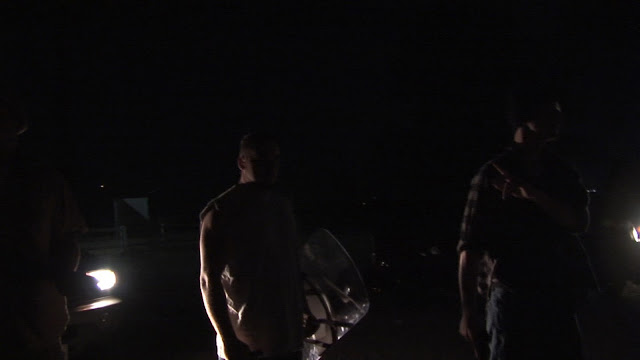
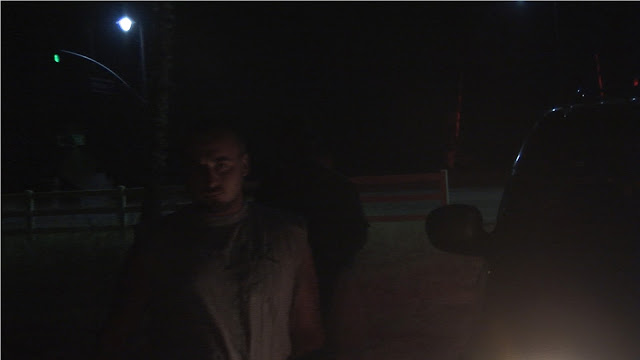
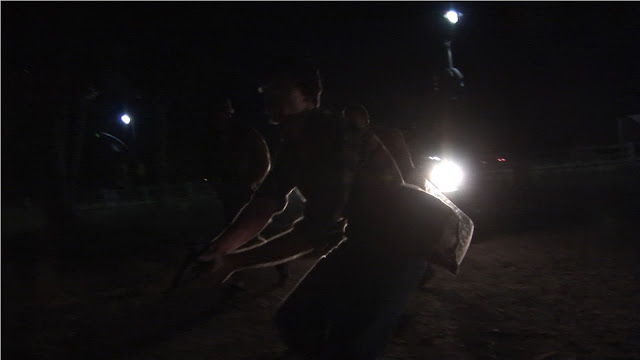
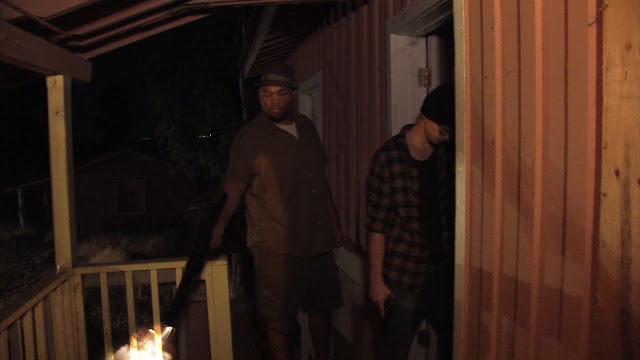
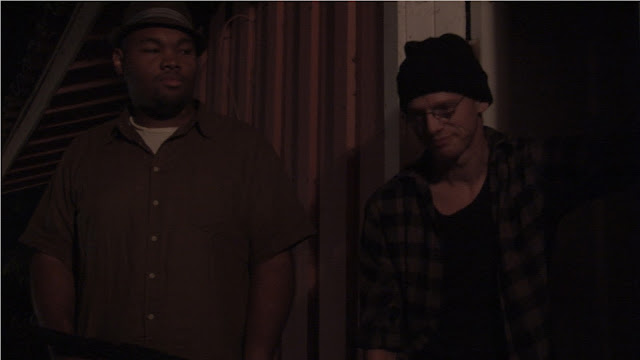
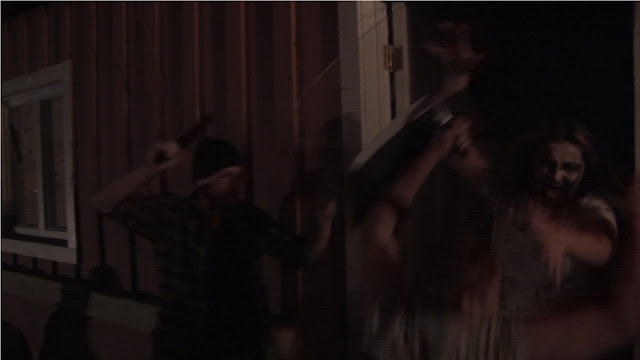
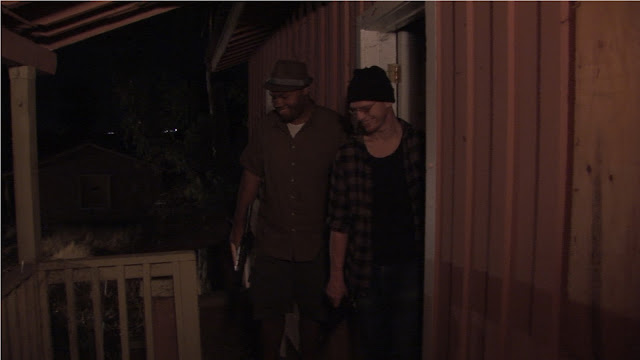
I suppose first things first:  The first skit we filmed almost three weeks back was a Zombie skit in collaboration with Underpaid Heroes project with Troy Norcross.  The whole thing was improvised on location, not to mention slightly less than legal it turns out!


Troy led the skit idea,  It took us a while to get makeup done on 2 zombies.  A few hours longer than expected running the whole production on account of the Navigator battery dying because of improvised lighting with the cars and 1 mobile spotlight being run from a power inverter (yay for homebrew videography)!

We tried to race through a lot of the shots with a tight time-table.  Mok operated the Camera hand-held and I ran the Shotgun mic the same.  There was hardly any time to plan out camera angles and really understand what the group wanted to do action-wise.


We ran out of time to really make sure we got all the shots we wanted to make the scene complete on account of it being after 3 AM by the time we shot the last bits.  The next day we dubbed the tape to Premier and built a rough edit in just 30 minutes.


With only a mono audio source to play with there would be a limited pallete of real-world audio to play with and a lot of sound replacement.  I refined the rough edit Mok had done and proceeded to the visual FX for several shots that happen in the skit.


Getting to Picture lock was fairly easy with the minimal VFX shots we had to work on.  The final edit still needs bumpers and motion graphics for the titles.

While the picture was pretty much complete aside from those elements I headed to audio and proceeded to break apart the audio.


I quickly went through the audio from each of the takes to pull apart the vocals, and then find useful ambiance to overlay or if it included Foley for footfalls etc. I moved them into timing and copied the audio where necessary. I could only do so much with most of the audio, so I proceeded to then mark spots and add in sound effects for replacement, and then foley and sound effects for enhancement.


First, iZotope's Ozone 4 was used to analyze the entire audio track before any noise reduction was applied to capture the EQ profile of the Rode NTG-3 mic's on-location audio.  The next step was the most time consuming.

I had to go through one clip at a time for each cut I made in the timeline to analyze and apply noise reduction for each separate take that followed the take from the video.  Once the noise profile was captured for that take, I could simply copy the plugin to the next clip I cut.  The plugin is very processor intensive so I had to bounce each clip after the noise reduction was applied.


We also had to replace quite a bit of Voice work from the on-location audio as it was too compressed and the impact noises with the gravel and dirt muddy up the mix.  I setup my shotgun mic outside my room and had everyone record their parts to the video.  I then applied the Ozone EQ matching profiles to the new material.

I still have to head into surround mix, and compose the underscore to the skit and then apply the final film grading and review before it's done.

Not sure if zombie is zombie or clown...
fast zombie = fast...
Hit the deck!
Kaplow!
Who plow?
Homie don't play dat.
Horror scene, or eerie homo-erotic love scene?

Yup, eerie homo-erotic love scene..

So, I have to get back to my busy schedule.  I will definitely be adding more up very soon of the other projects I've been working on.  Now, off to gym!